The China-Australia shipping market is undergoing profound changes in 2026. The Australian Border Force (ABF) is increasing its inspection efforts, LCL (Less than Container Load) cargo registration policies are being tightened across the board, international oil price fluctuations are leading to frequent adjustments to fuel surcharges, and major ports such as Victoria are adding new fees, all of which are increasing operating costs and risks across the industry.
For international students, new immigrants, cross-border e-commerce sellers, and individual users, shipping large items to Australia now faces unprecedented challenges: transportation costs have generally increased by 15%-20%, customs clearance times are unstable, the probability of goods being inspected and detained has significantly increased, and low-price traps and hidden fees are rampant in the market.
Based on 12 years of experience in the China-Australia cross-border logistics industry, combined with the latest policies and market data for 2026, this article provides you with a full-chain solution, from channel selection and price comparison to customs clearance procedures and final delivery confirmation, helping you achieve a "low-cost, high-efficiency, zero-risk" shipping experience in a complex and ever-changing market environment.
Core Policy Interpretation (Must-Read for 2026, Determining Customs Clearance Success or Failure)
1. Major Updates to Customs Clearance Policies
In 2026, Australian Customs will tighten its oversight of imported goods to an all-time high, with several new regulations directly impacting the efficiency and cost of customs clearance for each shipment.
All LCL (Less than Container Load) shipments must be fully declared to the shipping company and Customs 30 days in advance. Document review has been upgraded from a formality to a substantive inspection. This means Customs will cross-verify information such as the name, quantity, value, and country of origin of the goods; any inconsistencies may lead to the detention of goods. As a result, the average clearance time for LCL shipments has been extended by 2-3 days.
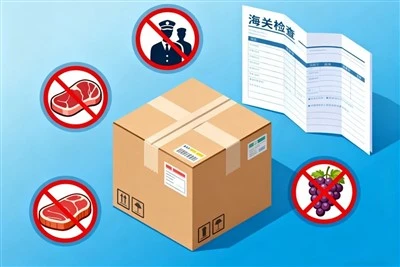
The X-ray inspection rate for ocean shipping containers has exceeded 80%, and high-risk goods are subject to 100% manual inspection. Customs will focus on cracking down on concealment, misdeclaration, underdeclaration of value, and smuggling of prohibited items. Once violations are discovered, not only will the goods be confiscated, but the company may also face hefty fines and even legal liability.
Declaration requirements are also stricter. Product names must be precise and specific, and vague descriptions such as "daily necessities," "groceries," and "accessories" are strictly prohibited. For example, you cannot simply declare "furniture," but must specify "solid wood dining table," "fabric sofa," etc.; you cannot simply declare "electronic products," but must specify "smartphone," "laptop," etc. Vague declarations will directly trigger manual inspection.
Regarding port charges, Victoria Port has levied a navigation and port service charge since January 2026, at a standard rate of AUD 35 per TEU (20-foot standard container) and AUD 70 per FEU (40-foot standard container). According to the latest announcement, this fee will double in July 2026, reaching AUD 70 per TEU and AUD 140 per FEU.
2. Latest Customs Duties and GST Rules (Key to Legally Saving Money)
Understanding Australia's customs duties and GST policies can help you legally save a significant amount of money. The tariff threshold remains unchanged. Non-tobacco and non-alcoholic goods with a CIF price (cost + insurance + freight) ≤ AUD 1000 are exempt from tariffs. For the portion exceeding AUD 1000, tariffs will be levied according to the rate corresponding to the HS code.
All imported goods, regardless of value, are subject to a 10% Goods and Services Tax (GST). The calculation formula is: GST = (CIF price + tariff) × 10%. It is important to note that GST is calculated on top of tariffs; therefore, the higher the tariff, the higher the GST.
The benefits of the China-Australia Free Trade Agreement remain in effect. Most goods originating in China, such as furniture, building materials, textiles, and home appliances, can enjoy zero-tariff preferences. To enjoy this preference, a China-Australia Certificate of Origin (CO) issued by Chinese Customs or the China Council for the Promotion of International Trade is required. Goods without a CO will be subject to tariffs at the Most Favored Nation (MFN) rate, typically between 5% and 15%.
The new immigrant tax exemption policy is a money-saving opportunity that many people easily overlook. Individuals immigrating to Australia for the first time can apply to import personal items used for more than 12 months duty-free. This includes furniture, appliances, clothing, books, and other personal items. It's important to note that this benefit can only be enjoyed once and must be applied for within 12 months of the immigration visa being approved.
3. Prohibited and Restricted Items List (New High-Risk Categories in 2026)
In 2026, Australian Customs updated its prohibited and restricted items list, adding several high-risk categories. Be sure to carefully check the list before mailing.
Absolutely prohibited items include: drugs, weapons and ammunition, counterfeit goods, e-cigarettes and accessories, uncertified batteries, fresh fruits and vegetables, meat, dairy products, ephedrine-based drugs, and pornography. If these items are discovered, they will not only be confiscated but may also lead to serious legal consequences.
Sensitive goods categories require specific requirements for import:
- Pre-packaged food: Must provide a complete English ingredient list and nutrition label; production date and expiration date must be clearly visible.
- Electrical products: Must have UN38.3 certification and the Australian RCM mark; batteries must be packaged separately from the device.
- Cosmetics: Must be registered with the Australian Therapeutic Goods Administration (TGA) and provide proof of ingredient safety.
- Wood products: Must undergo IPPC fumigation treatment and provide a fumigation certificate; otherwise, they will be detained by customs and subject to mandatory fumigation or destruction.
In-depth analysis of transportation channels (precise matching based on cargo volume/demand, avoiding unnecessary expenses)
Choosing the appropriate transportation channel is key to controlling costs and ensuring timeliness. Different cargo volumes and demands correspond to different optimal solutions.
1. Less-than-Container Load (LCL) – The first choice for small shipments/personal consolidation
LCL consolidates goods from multiple shippers into one container for transportation, suitable for users with smaller cargo volumes.
- Suitable Scenarios: Cargo volume ≤ 15 cubic meters, personal luggage, student parcels, Taobao consolidation shipping, small quantities of furniture, small-batch inventory preparation for cross-border e-commerce.
- Billing Method: Minimum shipment of 1 cubic meter. Billing is based on the greater of "actual volume / actual weight," with a conversion standard of 1 cubic meter = 333 kg. That is, if your cargo's actual weight exceeds 333 kg/cubic meter, you will be charged based on weight.
2026 Reference Prices:
- Port to Port: USD 80-150/cubic meter
- Door-to-Door (including customs clearance and taxes): USD 110-180/cubic meter
- Door-to-Door (excluding customs clearance and taxes): USD 90-150/cubic meter
- Transit Time: Port to Port shipping takes 18-28 days, and door-to-door shipping takes 30-45 days. During peak seasons (June-August and November-December), transit time may extend to 45-60 days.
The advantage of LCL (Less than Container Load) shipping lies in its high flexibility; it doesn't require filling a full container, making it suitable for small-batch shipments. However, it's important to note that LCL shipments involve more loading and unloading operations, resulting in a relatively higher risk of cargo damage and susceptibility to customs clearance delays caused by other goods.
2. FCL (Full Container Load) Shipping – The Preferred Choice for Large Shipments/Bulk Stockpiling
FCL shipping refers to a single shipper using a dedicated container for transport, suitable for users with large shipment volumes.
- Suitable Scenarios: Cargo volume ≥ 15 cubic meters, relocation for immigrants, bulk stockpiling for cross-border e-commerce, high-value goods.
Common Container Types and Specifications:
- 20GP (20-foot Standard Container): Internal dimensions approx. 5.9m × 2.35m × 2.39m, loading volume approx. 28 cubic meters, maximum load capacity approx. 28 tons.
- 40HQ (40-foot High Container): Internal dimensions approx. 12.03m × 2.35m × 2.69m, loading volume approx. 68 cubic meters, maximum load capacity approx. 26 tons.
2026 Reference Prices:
- 20GP Port-to-Port: USD 1800-2800/container
- 40HQ Port-to-Port: USD 2800-4200/container
Full container load (FCL) shipping has relatively stable transit times: port-to-port 22-30 days, door-to-door 28-40 days. Since FCL cargo belongs to only one shipper, customs clearance is simpler and cargo security is higher.
Full container load (FCL) shipping has a significantly lower unit cost than less than container load (LCL) shipping, and the larger the volume, the more cost-effective it becomes. However, it's important to note that FCL shipping requires advance booking of space, especially during peak seasons when space is extremely limited. Furthermore, loading, unloading, and delivery of FCL cargo require specialized equipment and personnel, resulting in relatively higher costs.
3. Service Model Comparison (Important for Beginners)
The market primarily offers two service models: DDP and DDU. Many beginners easily confuse these options, and choosing the wrong one may lead to additional costs and complications.
Comparison of Services
- DDP (Door-to-Door with All Duties and Customs Clearance) Includes: Domestic pickup, customs declaration, sea freight, Australian customs clearance, customs duties, GST, and destination delivery.
- DDU (Door-to-Door without Customs Clearance and Customs Duty) excludes: None. Customs duties, GST, port charges, and inspection fees.
- Suitable for: Individual users, international students, new immigrants, users who do not want to handle customs clearance and taxes, and users with Australian company qualifications who can handle customs clearance and taxes themselves.
- Advantages: One-stop service, worry-free and effortless, transparent fees, no extra expenses. Relatively lower price, suitable for corporate users with customs clearance capabilities.
- Points to Note: Relatively higher price, requires accurate cargo information. May incur additional taxes and fees, requiring self-handling of customs clearance issues.
For most individual users, DDP door-to-door service with all duties and customs clearance is the best choice. Although the price is slightly higher, it avoids all customs clearance risks and extra costs, truly achieving "goods delivered to Australia without leaving home."