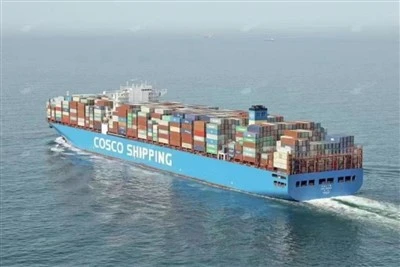
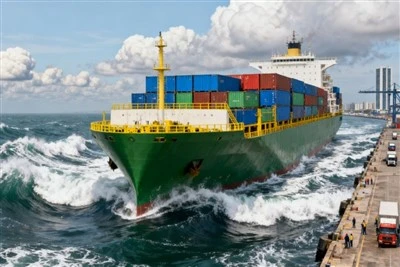
The China-Australia sea freight route connects China and Australia, specifically serving logistics needs for shipments from China to Australia. Whether it's large furniture, machinery, e-commerce parcels, or personal luggage, this route is a popular choice for cross-border transportation due to its high cost-effectiveness and stable capacity.
Why is a sea freight route worth considering?
In global trade, sea freight has always been the mainstay for bulk commodities and long-distance transportation. The core advantage of the Australia sea freight route lies in its cost. Compared to air freight, which can cost several times or even ten times more, sea freight significantly reduces logistics costs, making it especially suitable for large, heavy, or time-sensitive goods. For example, the cost of a 40-foot container from a Chinese port to Sydney may only be one-tenth of the cost of air freight, making it easily affordable for SMEs and individual sellers.
Process and Timeliness: From Shipment to Receipt
The operation of this route is not complicated. Typically, shippers deliver their goods to a distribution center, where they are packaged and cleared through customs. The containers then depart from major ports such as Shanghai and Shenzhen, heading directly to Sydney, Melbourne, or Brisbane. The entire sea voyage takes approximately 12 to 18 days, and with customs clearance and inland delivery, the overall transit time is around 20 to 30 days. This pace is perfectly suitable for non-urgent items. It's important to note that there are two shipping options from China to Australia: Full Container Load (FCL) and Less than Container Load (LCL). FCL is suitable for large quantities of goods, while LCL is suitable for less-than-container-load (LCL) shipments, with costs calculated based on volume or weight.